Insurance & Storm Damage
Monsoon and Hail Claims in Scottsdale: What Insurance Usually Covers
Tile, foam, and shingle roofs after monsoon wind and hail. What Scottsdale homeowners' policies usually cover, what they do not, and how sun damage fits in.
TL;DR
The quick version
- Often the answer depends on details that are easy to miss on a tile or foam roof.
- Policies are generally written for sudden damage from a specific event, so wear from sun and age is usually not covered.
- Whether the underlayment is covered depends on whether the storm damaged it or it was already worn out from age.
- Plan on paying your deductible.
- Stay off the roof. Tile breaks easily underfoot, and summer roofs get dangerously hot.

Every monsoon season, a few big cells roll across the Valley with wind gusts, sideways rain, and sometimes hail. Afterward, homeowners start hearing that insurance will pay for a new roof. Sometimes it does. Often the answer depends on details that are easy to miss on a tile or foam roof.
Here is how coverage usually works for Scottsdale roofs, where it tends to stop, and what to gather before you call your insurer. Think of it as background reading. Your policy and your agent decide what is covered.
Storm damage vs desert aging
Arizona roofs take a beating every day of the year, storm or no storm. Years of intense sun dry out underlayment, crack foam coatings, and fade or weaken materials. Policies are generally written for sudden damage from a specific event, so wear from sun and age is usually not covered. The key question an adjuster asks is whether the storm caused new damage you can document.
| Usually supports a claim | Usually does not |
|---|---|
| Tiles cracked or displaced by wind or hail on a known storm date | Tiles cracked from people walking on them over the years |
| Shingles torn off or creased during a monsoon | Shingles curled and brittle from sun exposure |
| Hail dents on vents, AC units, and metal flashing | Rusted or faded metal with no impact marks |
| Punctures or fractures in a foam roof after hail | A foam coating that has worn thin and needs recoating |
Tile roofs work differently
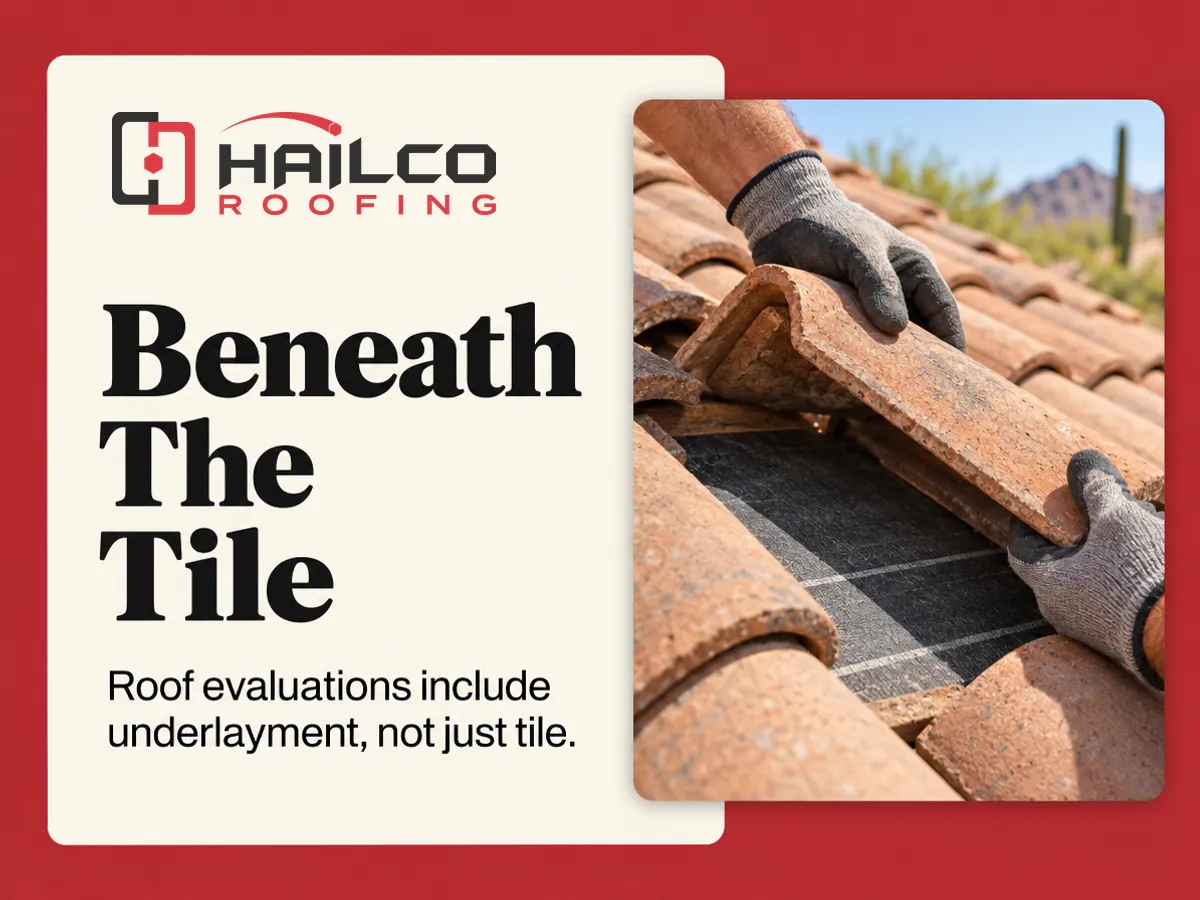
On a concrete or clay tile roof, the tiles shed most of the water, but the underlayment beneath them keeps the house dry. A storm can crack or shift tiles, and an adjuster may cover those tiles. Whether the underlayment is covered depends on whether the storm damaged it or it was already worn out from age. Older underlayment is often near the end of its life even when the tiles look fine, and that part may not be a storm item.
Ask your roofer to explain which repairs are storm damage and which are age-related, and to show photos of both.
Foam and flat roofs
Many Scottsdale homes have flat sections with foam or other coatings. Hail can leave fractures or punctures that let water in, while aging shows up as a thin, chalky, or cracked coating. A careful inspection separates the two so the claim lines up with what the storm actually did.
Matching tile
If some tiles break and the original style is no longer made, finding a match can be tough. Your policy's wording decides whether the insurer pays for a broader repair to keep the roof uniform. Ask your agent before assuming a perfect match is included.
Your deductible
Plan on paying your deductible. Upgrades, like switching from shingles to tile or adding a new color, usually come out of your pocket too. Get a written breakdown of what the insurer is expected to pay and what you will owe, knowing it can change if more damage turns up during the work.
Gather this before you call
- The date of the storm and any alerts or news you saved
- Photos of each side of the house, taken early in the morning before the heat makes it unsafe to be out long
- Close-ups of anything visibly damaged, including AC units, vents, gutters, and patio covers
- Any interior water stains, with dates
- Your roof's approximate age and any past repair invoices
Stay off the roof. Tile breaks easily underfoot, and summer roofs get dangerously hot.
Monsoon season brings storm chasers
After a big storm, out-of-town crews and door knockers show up fast. Be careful with blank contracts, same-day signing pressure, and anyone who promises a free roof. Ask who pulls the permit, whether they hold an Arizona contractor license, and who will answer when a tile slips next summer.
How the claim usually flows
- Protect the inside of the house if water is coming in.
- Photograph damage before temporary repairs.
- Contact your insurer to open a claim.
- Have a roofer inspect and give you a written report.
- Compare the adjuster's estimate with that report and ask about anything missing.
- Do not sign off on tear-off until you know what is approved.
Our post on monsoon insurance claims in Arizona covers the timing side in more detail.
Getting help
HailCo helps homeowners document storm damage and understand their estimate through our roof insurance claims in Scottsdale service. For an inspection or any other roofing question, reach out to HailCo, your roofing contractor in Scottsdale.
FAQ
Is sun damage ever covered?
Usually not, because it happens gradually. Damage from a specific storm is what policies are typically written for.
Can damaged tiles be replaced without redoing the whole roof?
Often, yes, if matching tiles are available and the underlayment is in good shape. Your roofer can tell you what the inspection shows.
Should I wait until monsoon season is over to file?
Check your policy's deadlines and talk to your agent. Waiting can make it harder to tie damage to a specific storm.
Next step
Document storm damage and understand the estimate.
HailCo helps homeowners document storm damage and understand their estimate through our roof insurance claims in Scottsdale service. For an inspection or any other roofing question, reach out to HailCo, your roofing contractor in Scottsdale.
More resources
Keep reading.
- Read →
Cost & Financing
What a tile roof actually costs in Arizona (and what you're really paying for)
Most quotes lump material, labor, underlayment, and tear-off into one number. Here's how to break it apart and compare contractors honestly.
- Read →
Insurance & Storm Damage
The 12-point monsoon checklist every Valley homeowner should run
What to inspect (and what to photograph) within 48 hours of a storm: for your records, your roofer, and if needed, your insurance carrier.
- Read →
Materials & Shingles
Shingle vs. tile vs. foam: which is right for your Arizona home?
A side-by-side comparison from a contractor who installs all three across the Valley every week. No manufacturer marketing.