Insurance & Storm Damage
Hail Damage vs Wear: How to Tell What Your Roof Needs
This guide helps Scottsdale-area homeowners sort storm damage from ordinary wear.
TL;DR
The quick version
- Some marks are hail. Some are Arizona sun and age. Mixing them up leads to the wrong insurance conversation and the wrong repair.
- Soft-metal dents plus matching shingle bruises are stronger evidence than a single mark.
- The job is to separate the two with photos, metals, and slope-by-slope notes.
- Carriers look for storm-created damage, not deferred maintenance.
- A honest contractor will say which one they see, not which one pays more.
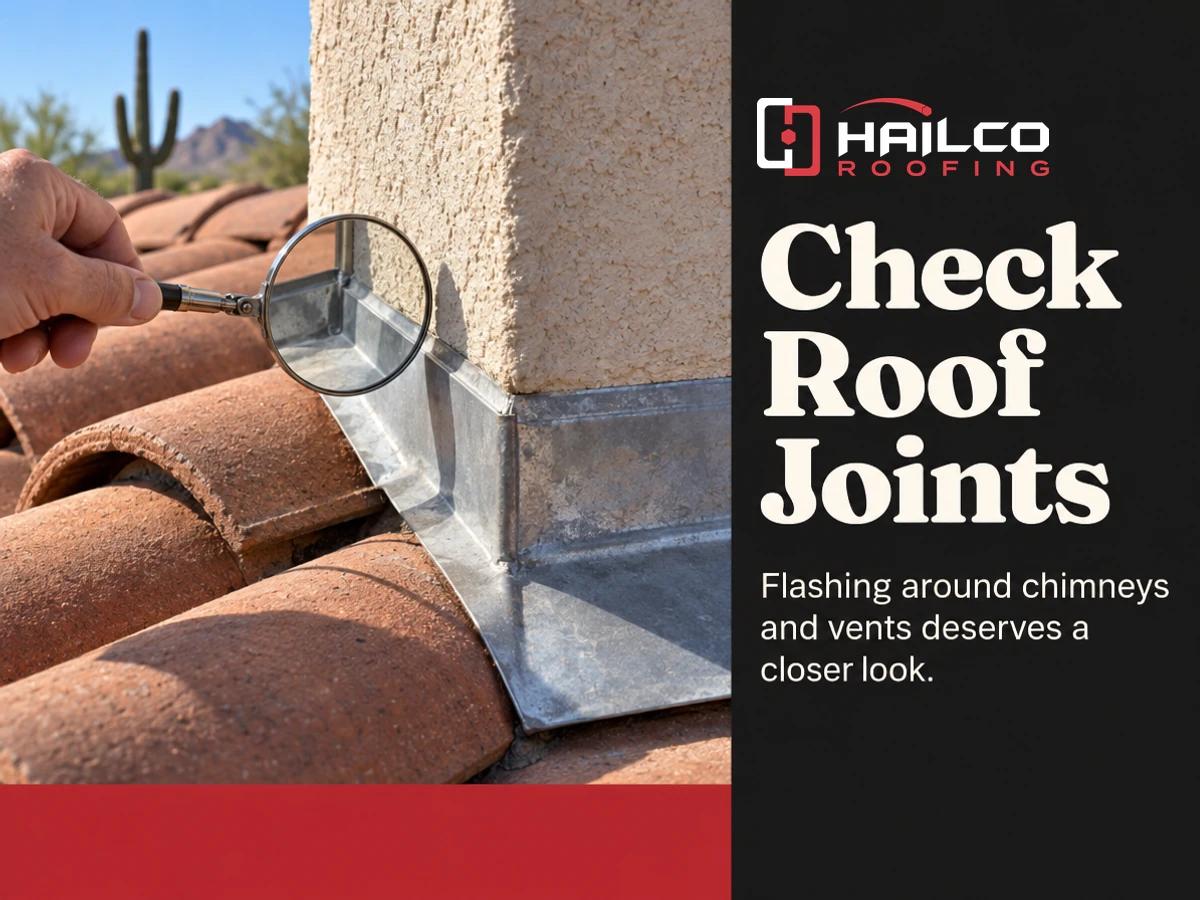
After a Valley storm, every bruise on a shingle looks urgent. Some marks are hail. Some are Arizona sun and age. Mixing them up leads to the wrong insurance conversation and the wrong repair.
This guide helps Scottsdale-area homeowners sort storm damage from ordinary wear. For local help, start with HailCo roofing in Scottsdale. Commercial "roofer Scottsdale" and "roofing contractor Scottsdale" intent stays on the main HailCo site entry. This article stays educational.
Hail clues vs wear clues
| Clue | More like hail | More like wear |
|---|---|---|
| Pattern | Random bruises in clusters, often on windward slopes | Even aging across large areas |
| Shingle surface | Soft spots, circular fractures, granule loss in hits | Widespread granule loss, curled edges, heat blistering |
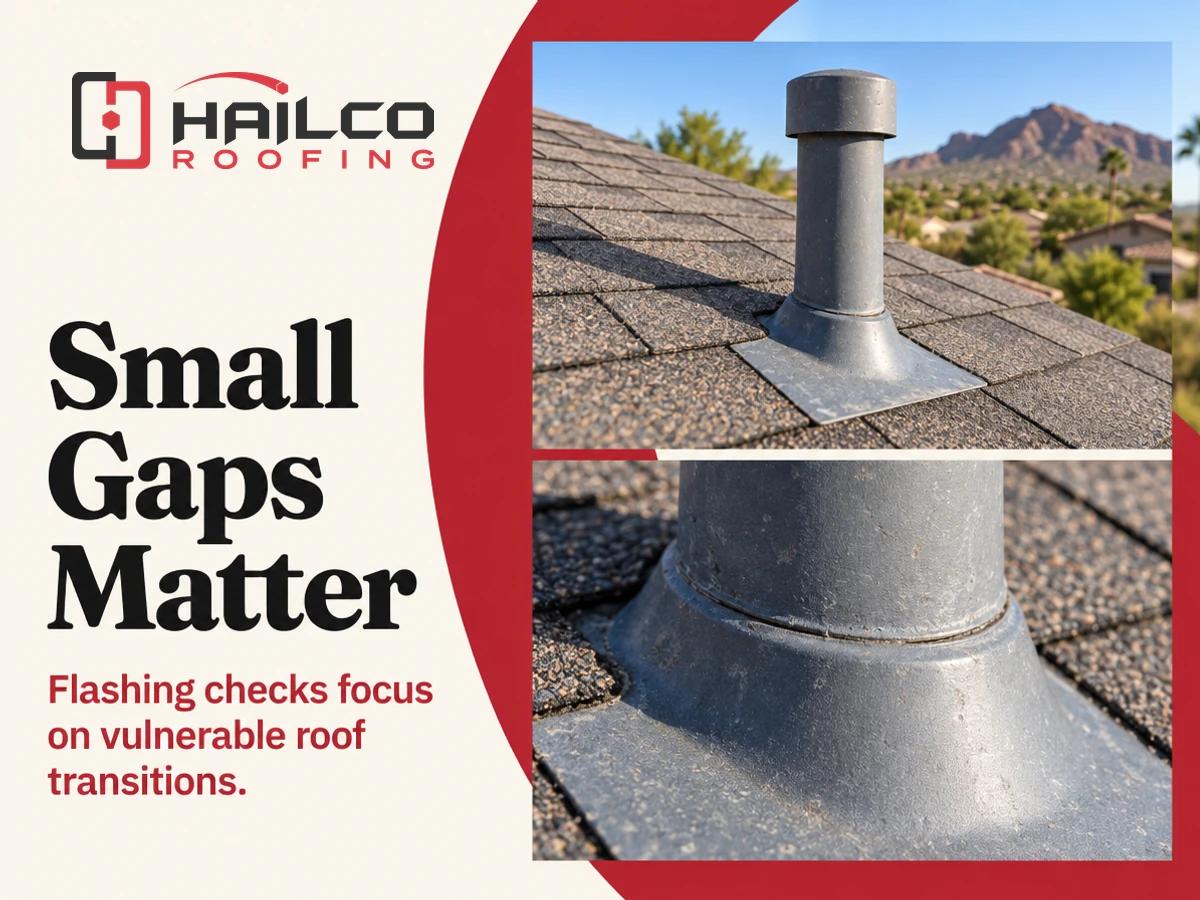
| Metal | Dents on vents, flashing, AC fins | Rust is less common than UV-dried sealant and loose fasteners without impact marks |
| Timing | Right after a documented storm | Gradual leaks over seasons |
| Neighbor context | Similar impact patterns nearby after the same cell | One house aging out while neighbors look fine for age |
Soft-metal dents plus matching shingle bruises are stronger evidence than a single mark. Tile and metal roofs need product-specific reads; do not assume asphalt rules apply one-for-one. Ask the office for details that apply to your situation when you book.
Desert-specific wear that fools people
- UV-baked sealant failure at flashings
- Thermal cycling that loosens fasteners
- Granule loss on south and west slopes that looks "spotted" from the ground
- Monsoon wind lift that is not the same as hail bruise patterns
- Heat blistering that can look circular until you feel for soft impact bruises
- Foot traffic marks from prior service visits that get blamed on the last storm
Arizona sun shortens the life of many asphalt products compared with cooler climates. That does not turn every aged roof into a hail claim, and it does not erase real hail either. The job is to separate the two with photos, metals, and slope-by-slope notes.
What to do in the first 48 hours
- Photograph elevations, close-ups, and attic or ceiling stains with timestamps.
- Note the storm date and weather alerts.
- Avoid walking a hot, steep, or brittle roof yourself. Afternoon tile and shingle surfaces in Scottsdale can be hazardous.
- Call a roofer for a documented inspection before major DIY patches.
- If there is an active leak, contain water indoors and ask about temporary protection.
- Keep AC fin and soft-metal photos. They often support a storm narrative when shingle bruises are hard to see from the ground.
How inspectors separate hail from wear in the Valley
A careful inspection usually checks:
- Shingle or tile fields on multiple slopes, not just the driveway side
- Ridges, hips, and valleys where impact and water both concentrate
- Soft metals: vents, flashing, gutters, downspout elbows, window wraps when accessible
- Attic or deck underside clues when accessible: wet sheathing, daylight pinholes, staining
- Age markers: prior patches, mismatched materials, brittle behavior, UV-cooked sealant
Hail evidence is often directional. One slope can look hammered while a protected slope looks quieter. Wear tends to look more even for the age of the roof. On tile, look for product-specific crack and chip patterns rather than asphalt "bruise" language. On flat roofs, ponding and membrane aging are different failure modes than hail punctures. Ask the office for details that apply to your situation when you book.
Insurance basics (not legal advice)
Carriers look for storm-created damage, not deferred maintenance. Clear photos and a written scope help. Deductibles and policy language still control what gets paid. Ask HailCo what claim documentation and adjuster support they can provide for your job.
Useful homeowner habits:
- Keep one folder with storm date, photos, inspection report, and adjuster notes
- Ask what is repair vs replace in the written estimate, line by line
- Do not authorize tear-off until you understand what is approved and what you may owe
- Be wary of high-pressure storm chasers who arrive with blank paperwork and urgency theater
This section is orientation, not a promise that any claim will be paid.
Repair or replace after hail?
- Repair can fit when hits are limited and the surrounding roof still has life.
- Replace enters the conversation when bruising is widespread, the roof is near end of life, or matched materials are unavailable.
- Partial work sometimes sits between those options, but color match and remaining life still matter under desert sun.
A honest contractor will say which one they see, not which one pays more. Ask how they document bruises, whether they will meet the adjuster on site, and how they handle findings that appear during tear-off. Ask how HailCo documents findings and whether they can meet the adjuster on site.
For a Scottsdale inspection, use HailCo roofing services.
Common mistakes after a Scottsdale storm
- Waiting weeks to photograph while monsoon follow-up weather blurs the story
- Walking a hot roof in soft shoes because a neighbor said the marks were obvious
- Signing contingency paperwork you do not understand
- Patching with random sealant that hides evidence before anyone inspects
- Assuming every dark spot is hail when algae is less common than UV wear, but foot traffic and prior repairs still confuse the picture
- Choosing a contractor only on "we deal with insurance" slogans without checking license, insurance, and who warrants the work locally
Scottsdale and North Valley timing
Monsoon season brings wind, hail, and sudden volume spikes for contractors. Document early even if the roof still "looks fine" from the street. Many bruises need slope access or binoculars. Soft-metal dents are often the easiest ground-level clue.
If out-of-area crews roll in after a big cell, slow down. Ask who pulls the permit, who warrants the work, and who answers the phone in six months. Local accountability matters after the claim check clears.
Prep checklist before the inspection
- Storm date and approximate time
- Photo set: elevations, close-ups, attic or ceiling stains, metals
- Prior roof age and any past claim or repair notes you have
- Access notes: gates, dogs, HOA rules, steep terrain
- Questions list: repair vs replace, timeline, who meets the adjuster, warranty terms
Bring that packet so the visit produces a usable report instead of a vague hallway chat. HOA rules can slow material choices and exterior changes, so note any architectural guidelines before you fall in love with a shingle that the board will reject.
Tile, flat, and asphalt: do not mix the rulebooks
Asphalt bruise language does not transfer cleanly to concrete or clay tile. Tile assessment looks for cracks, chips, underlayment age, and whether the system fails at the weather barrier rather than at a single cosmetic chip. Flat roofs fail through punctures, seam issues, and ponding more than classic shingle bruises. Say which system you have when you book so the inspector brings the right playbook. Ask the office for details that apply to your situation when you book.
If a prior inspector only photographed the driveway elevation, ask for a full-slope revisit. Directional hail and desert UV wear both hide on the slopes you cannot see from the street.
After the adjuster leaves
Compare the written scope to the inspection photos. If line items skip soft metals that were clearly dented, or ignore a slope that photographed badly, ask questions before you approve work. Supplements during tear-off happen; blank hope that "they will just pay more later" is not a plan. Keep your photo folder until the job is closed and the warranty paperwork is in your hands.
FAQ
Can I see hail damage from the ground?
Sometimes. Many bruises need slope access or binoculars. Soft-metal dents on vents and AC fins are often easier to spot from the ground than shingle bruises.
Do AC fin dents prove roof hail?
They support a storm narrative. They do not automatically prove shingle failure by themselves.
How fast should I act after a Scottsdale storm?
Soon enough to document and stop leaks. Storm volume changes booking windows. Call early after a cell hits so documentation is not delayed.
What about tile roofs?
Tile needs a product-specific assessment. Do not apply asphalt bruise rules one-for-one. Ask the office for details that apply to your situation when you book.
Will this compete with "roofing contractor Scottsdale"?
No. Educational H1 only. Commercial intent stays on the main HailCo site entry.
Sources
- Manufacturer shingle damage guides and NOAA storm event records linked in final CMS.
- Tile manufacturer hail guidance is a useful public reference when your roof is tile.
Next step
Get a documented inspection before claims talk starts.
A documented inspection separates hail bruises from ordinary desert aging. Ask what claim documentation and adjuster support HailCo can provide for your job.
Services covered in this guide
Ready to act on what you read?
More resources
Keep reading.
- Read →
Cost & Financing
What a tile roof actually costs in Arizona (and what you're really paying for)
Most quotes lump material, labor, underlayment, and tear-off into one number. Here's how to break it apart and compare contractors honestly.
- Read →
Insurance & Storm Damage
The 12-point monsoon checklist every Valley homeowner should run
What to inspect (and what to photograph) within 48 hours of a storm: for your records, your roofer, and if needed, your insurance carrier.
- Read →
Materials & Shingles
Shingle vs. tile vs. foam: which is right for your Arizona home?
A side-by-side comparison from a contractor who installs all three across the Valley every week. No manufacturer marketing.