Materials & Shingles
Matching tile roof color in Scottsdale: how to find your code, source replacements, and clear HOA approval
You need partial tile replacement, your HOA requires a color match, and the original tile is discontinued. Here's how to identify your manufacturer and profile, source replacement tile that actually matches, and get the ARC to approve it.
TL;DR
The quick version
- If your Scottsdale tile roof needs partial replacement and the original color is hard to find, that's expected: tile installed 1990 to 2008 is now 18 to 36 years old, and most manufacturers retire colors on a 10-year cycle.
- Three identifiers you need before any sourcing conversation: the manufacturer (Eagle, Boral/Westlake Royal, US Tile, or older brand), the profile (Spanish-S, Capistrano, flat, or other), and the color code.
- Five paths to identify your tile, cheapest first: closing documents, City permit records, HOA archive, pulling a tile to read the stamp, paid manufacturer color match from a sample.
- When the original color is unavailable: exact match from continuing line, closest current color from same manufacturer, salvage tile from regional broker yards, custom-batch production (cost-prohibitive for small jobs), slurry coating, or HOA-approved substitution.
- Most partial-replacement color-match jobs in Scottsdale run $1,200 to $4,800 including sourcing, ARC submittal, City permit, and install.
If you live in Scottsdale, your tile roof has had a few tiles break, and your HOA requires a color match for the replacements, you're about to find out something that takes most homeowners by surprise. The exact color of tile that was installed on your home in 1998 is very likely not made anymore. The manufacturer either retired the color, was bought by a competitor that retired the color, or went out of business entirely. Meanwhile, your HOA design committee still expects the new tile to look identical to the rest of the roof. From the street.
This is the conversation we have with Scottsdale homeowners almost every week, and the good news is that it's almost always solvable. The four common solutions (exact-match from a continuing line, custom manufacturer color match, salvage sourcing from broker yards, or HOA-approved substitution) cover almost every situation. Which one applies to your specific roof depends on which manufacturer made your tile and how long ago.
This guide walks through how to identify what's actually on your roof, what your real options are when the original color is unavailable, and how to get the HOA Architectural Review Committee to approve whatever path you end up taking. None of this is meant to make a partial replacement scary. It's meant to make the conversation predictable so you can plan around it.
Why this question is harder in Scottsdale than most places
Two reasons converge.
First, Scottsdale's master-planned communities have unusually strict HOA color requirements. DC Ranch, Silverleaf, Troon, Grayhawk, McCormick Ranch, Gainey Ranch, Desert Mountain, Estancia, and the rest all maintain approved color palettes and most require the replacement to match the original from the curb. See Scottsdale HOA roofing requirements for the broader community-by-community breakdown.
Second, the original tile on most Scottsdale homes was installed between 1990 and 2008, which puts the original product line at 18 to 36 years old. Most manufacturers retire colors on a roughly 10-year cycle as homeowner taste changes and as raw material costs shift. So the specific concrete tile color that came with your DC Ranch home in 1999 has probably been retired for years, even if the manufacturer (often Eagle Roofing) is still very much in business and producing similar colors today.
The combination is what makes this a Scottsdale-specific problem. In a less HOA-driven city the homeowner could just install a "close enough" replacement and move on. In Scottsdale the ARC will reject "close enough."
The framework: every tile has three identifiers
Before any sourcing conversation, you need three pieces of information about your existing tile.
1. Manufacturer. Eagle Roofing, Boral (now Westlake Royal Roofing), US Tile (also now Westlake Royal), or one of the older brands that no longer exist (MonierLifetile, Westile, others). The manufacturer determines who you can call for an exact or custom match.
2. Profile. The physical shape of the tile. Spanish-S (the rolling barrel shape), Capistrano or other flat mission-style, flat shake-look, or slate-look. The profile determines which product lines are compatible; you cannot mix profiles within a roof field.
3. Color code. The manufacturer's specific color name or number. Eagle uses names like "Cuesta Brown," "Antigua," "Desertstone." Boral uses similar naming. The color code is what tells the manufacturer whether they still produce the exact color, or if not, what the closest current color is.
If you have all three, the sourcing conversation is straightforward. If you have none, the first step is identification.
How to identify what's on your roof
Five paths, in order from cheapest to most expensive.
Check the original closing documents. When you bought the home, the seller's disclosure or the original construction documents (if it was a builder-direct purchase) often listed the roof material. Worth a five-minute search through your file before doing anything else.
Pull the City of Scottsdale building permit record. Any closed re-roof permit since 1990 lists the material in the application. The City's online permit search is free and takes two minutes. See our Scottsdale roofing permits guide for how to find them. If you see a closed re-roof permit on file, the material specification is in the application.
Check the HOA's archived material specifications. If you're in DC Ranch, Silverleaf, Troon, Grayhawk, or any other master-planned community, your HOA management company often has the originally-approved material specification from the home's construction archived. Call them and ask. This is the most reliable single source.
Pull a tile from the roof and look at the stamp. Almost every concrete or clay tile manufactured in the last 40 years has the manufacturer name (and often the color code) stamped on the underside. We do this on every estimate that involves color matching. Pulling a single tile is a 10-minute job for a roofer with safety equipment. Do not climb your own roof to do this; the safe-fall ratio on Scottsdale tile roofs is unforgiving.
Get a manufacturer color match from a sample. If the tile stamp is illegible or absent (older tiles sometimes have no stamp at all), every major manufacturer offers a paid color-matching service where you mail or hand-deliver a sample tile and they identify the closest current product. Costs $50 to $200, takes two to four weeks. We typically run this only as a last resort.
The three dominant Scottsdale tile manufacturers
Most Scottsdale tile roofs are from one of these three companies.
Eagle Roofing Products. Independent, still active, the most commonly approved manufacturer across Scottsdale master communities. Eagle has the deepest color palette and the best color matching for older installations. Their Capistrano and Bel Air profiles dominate Scottsdale tile work. If you have Eagle tile and a partial replacement need, Eagle's customer service line will tell you within a few days whether your exact color is still made, which currently produced color is closest, or whether they can run a custom batch.
Boral (now Westlake Royal Roofing). Boral was acquired by Westlake Royal Roofing a few years ago and the product line was integrated. Older HOA approval documents still reference "Boral" by name and many of the products are the same. Common Scottsdale profiles include the US Tile line (their mission-style clay tile) and Saxony (their flat concrete profile). Boral colors from before the acquisition may or may not still be produced; Westlake's customer service can confirm.
US Tile (also now Westlake Royal Roofing). Premium clay tile line. Common in Desert Mountain, some Silverleaf custom homes, and other higher-end Scottsdale installations where the original construction specification was clay rather than concrete. Clay tile color matching is actually easier than concrete because clay colors come from natural pigments and aren't subject to the same color-fashion cycles.
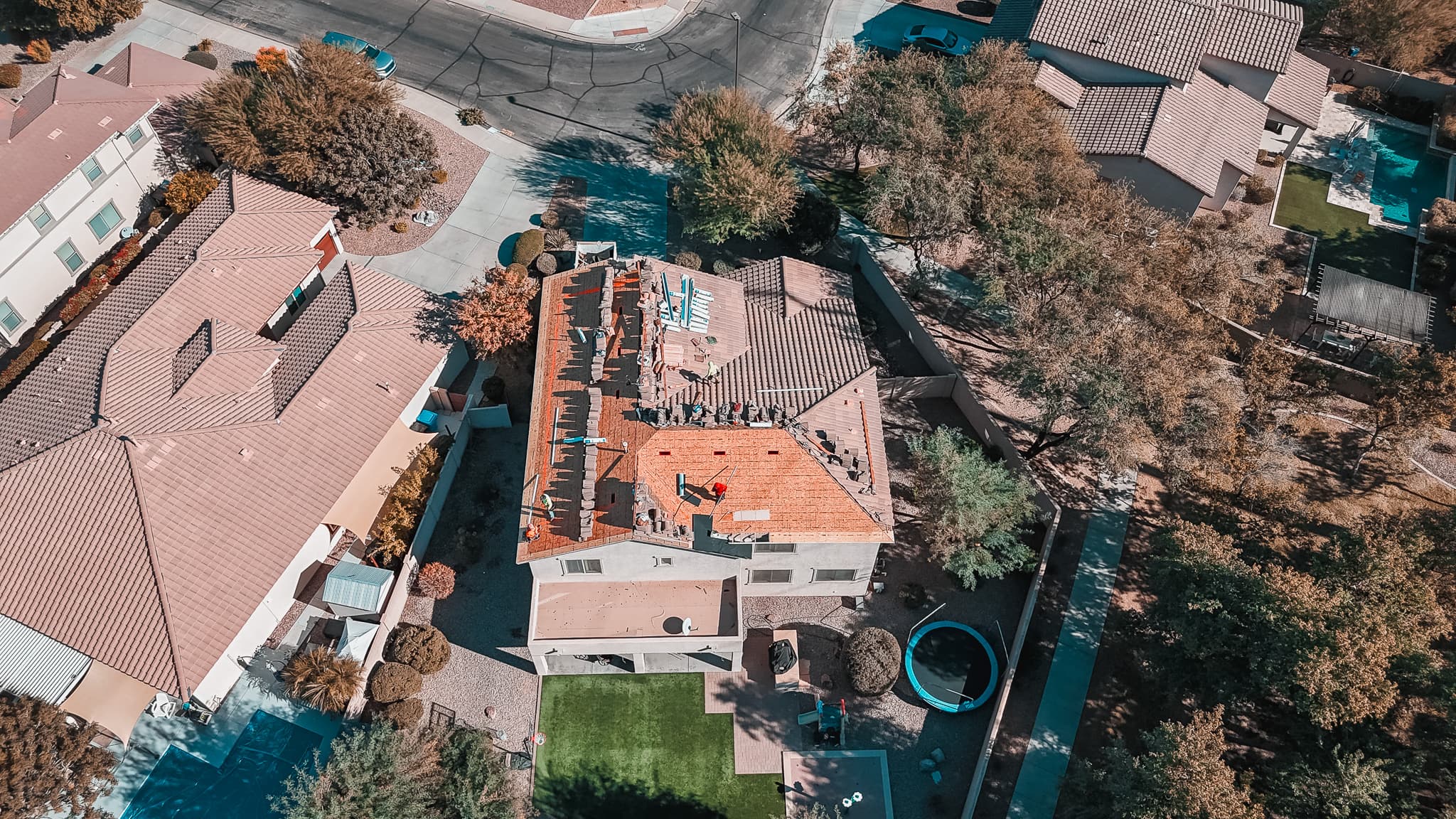
Older brands you may encounter. MonierLifetile (filed for bankruptcy and ceased production), Westile, and a handful of regional manufacturers that went out of business in the 2000s and 2010s. Tile from these manufacturers can only be replaced through salvage sourcing or HOA-approved substitution from a continuing manufacturer. We handle both.
Common reasons your original color is "unavailable"
Five scenarios we see regularly.
The color was retired. Manufacturers refresh their palettes every 8 to 12 years. Colors that don't sell well get cut. Your specific color may have been popular for the era when your home was built and quietly retired in 2010.
The manufacturer was acquired and the color line was rationalized. When Boral was acquired by Westlake Royal, the combined company retained the best-selling colors and retired duplicates. Boral colors that were similar to existing Westlake Royal colors got cut.
The manufacturer is no longer in business. MonierLifetile went bankrupt in 2010 and ceased production entirely. Tile installed before the closure can only be matched through salvage or substitution.
The raw material specification changed. Some older colors used pigments that are no longer commercially viable. Even if the manufacturer is still in business and the profile is still made, the specific color may have been reformulated and no longer matches.
The original installation used a special-order or custom color. Some Scottsdale custom homes had custom-blended tile color at construction, with no standard SKU. These are the hardest to match and almost always require either custom-batch production (which usually has a minimum order quantity that makes it cost-prohibitive for small repairs) or HOA-approved substitution.
Your real options when the original is unavailable
In order of preference.
Exact match from continuing line. Sometimes you get lucky and the original color is still in production. We confirm this with the manufacturer first on every job. Resolution time: a few days. Cost: the same as any current product.
Closest current color from same manufacturer. When the original is retired, the manufacturer almost always has a successor color in their current line that's visually close. From the street, the difference is often imperceptible after a few months of sun-fading on the new tile. The ARC may or may not approve this depending on community standards.
Salvage tile from broker yards. Specialty roofing salvage yards in Arizona and California stock used tile pulled from torn-off roofs. If your original color was popular in the Phoenix Valley between 1995 and 2008, there's a reasonable chance a salvage broker has matching tile sitting in inventory. We have relationships with three regional salvage suppliers and check their inventory on every match call. Cost is usually 50 to 150% of new tile price (yes, sometimes salvage costs more than new because it's the only way to get the exact color).
Custom-batch manufacturer match. Major manufacturers will produce a custom color batch matched to a submitted sample, but minimum order quantities are typically 50 to 200 squares (5,000 to 20,000 sq ft of tile). Cost-prohibitive for small repairs. Sometimes workable for full-roof replacements where you're buying enough tile to hit minimums anyway.
Re-color the existing roof with slurry coating. A specialty service that essentially re-paints the existing tile with a manufacturer-approved coating, allowing visually consistent partial replacement using current-production tile. Coating service life is 8 to 15 years and the ARC must approve the coated finish. Niche but real.
HOA-approved color substitution. If exact match isn't possible, the ARC sometimes approves a current-production color that's visually close. The approval depends on community standards (DC Ranch and Silverleaf are stricter than Grayhawk and McCormick Ranch) and on how visible the affected slope is from the street.
How HOA approval works for color matches
If you can source the exact original color or an approved alternative from the same manufacturer, the ARC submittal is usually a formality. Documentation is the same as any roof replacement: sample board (or salvage tile photo), contractor information, scope of work.
If you're proposing an HOA-approved substitution (closest current color, different but approved alternative), the ARC will want to see a physical sample board and may want to see how the proposed tile looks alongside the existing tile in situ. We bring sample boards to the property and photograph them next to the existing roof for the ARC submittal. See Scottsdale HOA roofing requirements for the broader ARC process and typical timelines.
If your community's ARC is going to be strict (Silverleaf, DC Ranch, Desert Mountain custom homes), budget 4 to 12 weeks for the approval. If you're in Grayhawk or McCormick Ranch, the turnaround is usually 2 to 4 weeks.
How HailCo handles color matching
When you call us for a partial tile replacement, color matching is part of the project from day one. We don't quote the job until we've identified the existing tile and confirmed sourcing for the match. Specifically:
- We pull a sample tile from your roof (with safety equipment, by a licensed roofer) to identify manufacturer, profile, and color code
- We call the manufacturer to confirm whether your exact color is still in production
- We check our regional salvage broker contacts for matching used tile if needed
- We prepare a sample board (or salvaged tile sample) for ARC submittal
- We submit the ARC package and respond to any questions
- We coordinate the City of Scottsdale permit (separate process; see our permits guide for what's required)
- We execute the install and handle final inspection
Most Scottsdale partial-replacement color match jobs run $1,200 to $4,800 depending on tile count, sourcing path, and roof access. Full neighborhood-by-neighborhood replacement timing context, if you're trying to figure out whether partial replacement makes sense or you're due for a full re-underlayment, is in our Scottsdale roof age guide by neighborhood.
For a paid inspection ($150 to $275, credited toward any work) or a written estimate on partial tile replacement, call (480) 582-3122 or request a free quote. Tanner Sewell (HailCo's lead estimator and co-owner) walks every residential job himself, identifies the existing tile on the spot, and tells you honestly whether the match is going to be easy, hard, or going to require an ARC conversation. We'll be straight with you about what's possible, what it'll cost, and what timeline to plan for. No high-pressure sales calls, no upsells you don't need. Just a real conversation about your roof and your neighbors' roofs.
Side-by-side
Identifying your Scottsdale tile manufacturer
| Manufacturer | Identifying marks on tile underside | Common Scottsdale profiles | Current status |
|---|---|---|---|
| Eagle Roofing Products | "EAGLE" stamp, often with profile name and color code | Capistrano, Bel Air, Malibu, Concord | Independent, still active; deepest color matching support |
| Boral (now Westlake Royal Roofing) | "BORAL" or "WESTLAKE ROYAL" stamp; older tiles may show "MONIER" | US Tile (mission), Saxony (flat) | Acquired by Westlake; many Boral colors retired in rationalization |
| US Tile (now Westlake Royal Roofing) | "US TILE" stamp; natural clay texture (vs concrete) | Mission-style S-tile clay profiles | Acquired by Westlake; line continues; clay color matching easier than concrete |
| MonierLifetile | "MONIER" or "LIFETILE" stamp | Spanish-S, flat concrete profiles | Bankrupt 2010; all colors discontinued; salvage sourcing only |
| Westile and other regional brands | Various stamps; some older tiles unmarked | Various | Most out of business; salvage or HOA-approved substitution required |
Frequently asked
Questions we hear about this.
How do I find out what brand my Scottsdale tile roof is?+
Five paths, cheapest first. Check your original home closing documents or builder construction documents for material specifications. Pull your property's roof permit history from the City of Scottsdale's online permit search; closed re-roof permits list the material in the application. Call your HOA management company and ask if they have the originally-approved material specification archived (most master-planned Scottsdale communities do). If those don't surface an answer, a roofer can pull a single tile from your roof and read the manufacturer stamp on the underside; almost every concrete or clay tile manufactured in the last 40 years has the maker name and often the color code stamped. Last resort is a paid manufacturer color match from a sample, which costs $50 to $200 and takes 2 to 4 weeks.
My original tile color is discontinued. What are my options?+
Six options, in order of preference. (1) Exact match from a continuing color line; sometimes you get lucky and the original is still produced. (2) Closest current color from the same manufacturer, which usually fades to visual match within a few months. (3) Salvage tile from regional broker yards; we have relationships with three Arizona and California suppliers who stock used tile pulled from torn-off roofs. (4) Custom-batch production from the original manufacturer; usually cost-prohibitive for small repairs because of minimum order quantities. (5) Slurry coating that re-colors the existing roof to allow current-production replacement tile; specialty service, 8 to 15 year coating life. (6) HOA-approved color substitution to a current-production tile that's visually close. Which option applies depends on which manufacturer, which color, and how strict your specific HOA is.
Can I get an HOA to approve a different color if my original isn't available?+
Often yes, but it depends heavily on the specific community. Grayhawk, McCormick Ranch, and Scottsdale Ranch are generally more flexible on substitution when the original color is genuinely unavailable. DC Ranch, Silverleaf, Desert Mountain, and Estancia are stricter and often require salvage sourcing of the original color rather than substitution. The ARC will want to see a physical sample board (or salvaged tile sample) and may want to see how the proposed tile looks alongside the existing roof in situ. Approval timelines run 2 to 12 weeks depending on community. We prepare the full submittal package and handle the back-and-forth with the management company on every job.
What's the difference between Eagle, Boral, and US Tile?+
Eagle Roofing Products is an independent company that's been making concrete tile in the Southwest for decades. The most commonly approved manufacturer across Scottsdale master-planned communities, with the deepest color palette and the strongest customer-service support for older installations. Boral was a major tile manufacturer that was acquired by Westlake Royal Roofing a few years ago; many older Scottsdale HOA approval documents still reference Boral by name and the products are largely the same but some colors were retired in the rationalization. US Tile is a premium clay-tile line that's also now part of Westlake Royal Roofing; common in Desert Mountain, some Silverleaf custom homes, and other higher-end Scottsdale installations. Clay tile color matching is actually easier than concrete because clay colors come from natural pigments and don't follow the same color-fashion retirement cycles.
Does HailCo handle the color matching and sourcing on my behalf?+
Yes, end to end. On every Scottsdale partial tile replacement we identify the existing tile (manufacturer, profile, color code) by pulling a sample with proper safety equipment, call the manufacturer to confirm whether your exact color is still produced, check our regional salvage broker network for matching used tile if needed, prepare a sample board for ARC submittal, submit the ARC package and respond to any committee questions, coordinate the separate City of Scottsdale building permit, and execute the install with final inspection. You don't make any of those calls yourself; we handle the full sourcing path. Most partial-replacement color-match jobs in Scottsdale run $1,200 to $4,800 all-in depending on tile count, sourcing path, and roof access. Call (480) 582-3122 or request a free quote to start the conversation.
Next step
Need partial tile replacement and worried about the color match clearing your HOA?
We identify your existing tile (manufacturer, profile, color code), confirm sourcing for an exact or approved-substitute match, prepare the ARC sample board, and handle the City permit. Most jobs run $1,200 to $4,800 all-in.
Services covered in this guide
Ready to act on what you read?
- Tile RoofingScottsdale tile roofing specialist: concrete and clay tile installation, repair, and lift-and-set re-underlayment across the Phoenix Valley.
- Roof RepairTargeted roof repair across the Phoenix Valley — leaks, cracked tile, lifted shingles, and failed flashing found and fixed correctly.
- Roof ReplacementFull roof replacement in Scottsdale & Phoenix: tear-off, new system install, permits, and cleanup — when repair is no longer the right call.
More resources
Keep reading.
- Read →
Cost & Financing
What a tile roof actually costs in Arizona (and what you're really paying for)
Most quotes lump material, labor, underlayment, and tear-off into one number. Here's how to break it apart and compare contractors honestly.
- Read →
Insurance & Storm Damage
The 12-point monsoon checklist every Valley homeowner should run
What to inspect (and what to photograph) within 48 hours of a storm: for your records, your roofer, and if needed, your insurance carrier.
- Read →
Materials & Shingles
Shingle vs. tile vs. foam: which is right for your Arizona home?
A side-by-side comparison from a contractor who installs all three across the Valley every week. No manufacturer marketing.