Process & Scheduling
Scottsdale roofing permits: when you need one, what it costs, and how inspections actually work
The permit isn't optional, the fee isn't a contractor markup, and the inspection isn't a formality your roofer can skip. Here's what the City of Scottsdale actually requires, what it costs, and what happens if you skip it.

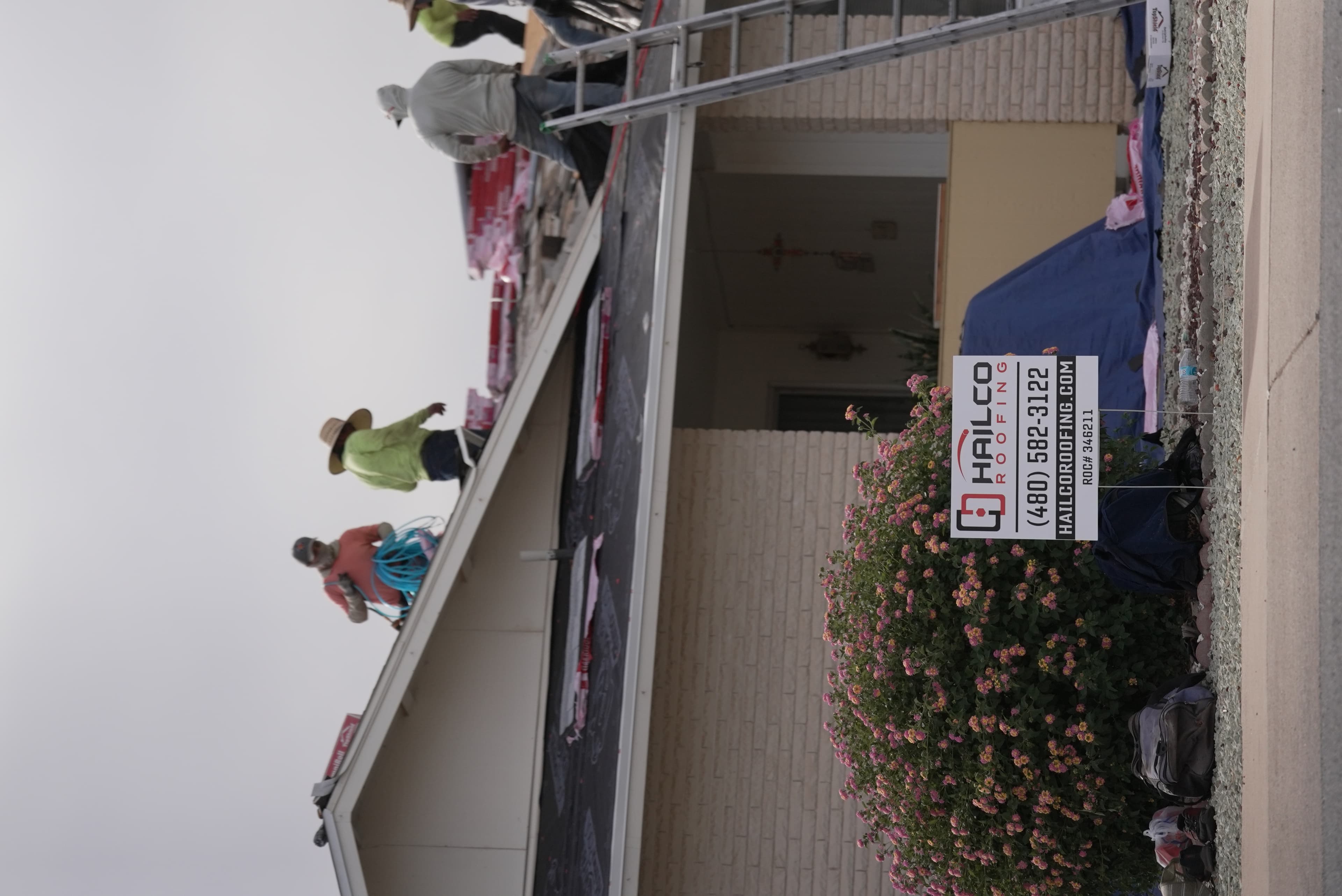
TL;DR
The quick version
- City of Scottsdale building permits are required for full roof replacements, lift-and-set re-underlayment, partial replacement over ~100 sq ft, and most structural roof work. Small spot repairs are usually exempt.
- Typical permit fees for residential re-roofs run $250 to $800 depending on contract value. Permit fees should appear as a separate line item on every legitimate Scottsdale roofing quote.
- Permits are typically issued within 1 to 5 business days for like-for-like material replacements; plan review (triggered by material switch or structural change) adds 1 to 3 weeks.
- Inspectors check underlayment, flashing, drip edge, fastening pattern, ventilation, and roof-to-wall transitions. A typical inspection takes 15 to 30 minutes.
- Skipping the permit costs $2,000 to $8,000 at resale (retroactive permit, inspection, corrective work, closing delays) versus $400 to $1,200 upfront. Easy call.
If you're about to replace a roof in Scottsdale, the permit isn't optional, the fee isn't a contractor markup, and the inspection isn't a formality your roofer can talk you into skipping. Doing this wrong (or working with a contractor who shrugs it off) shows up years later when you sell the house and the buyer's inspector asks for the closed permit and there isn't one.
I've seen this exact conversation kill a Scottsdale resale more than once. Four years after a roof replacement, the seller has no closed permit, the buyer's title work flags it, and what was supposed to be a smooth closing turns into a six-week scramble and a five-figure concession. None of that has to happen if the permit gets pulled and closed correctly the first time.
This guide walks through what the City of Scottsdale actually requires for a residential roof permit, what it costs, how the inspection works in practice, and what happens when work gets done without one. We pull permits on every Scottsdale roof we replace, so most of this comes from running the process repeatedly.
Why Scottsdale permits aren't optional
Scottsdale operates its own Planning and Development Services department, separate from Maricopa County and from the surrounding cities. Roof replacements (full and most partial) require a building permit issued by the City. The legal framework is the International Residential Code (IRC) as adopted and amended by City of Scottsdale Ordinance.
Three things matter for homeowners.
First, the permit requirement runs with the property, not the contractor. If your roof was replaced five years ago by a previous owner without a permit, that's a missing permit YOU now have to resolve when you sell. It doesn't matter that you weren't the homeowner who hired the unpermitted contractor. The City's record (or the lack of one) follows the parcel.
Second, the City's enforcement powers are real. If they discover unpermitted work (often via a complaint, a neighbor's permit submittal, or a future sale closing), they can require a retroactive permit application, the work to be opened up for inspection, and corrective work if anything isn't to code.
Third, your title insurance and buyer's home inspection will flag missing permits at resale every time. We've watched Scottsdale resales fall apart over a missing roof permit from work done years prior. The buyer asks for the closed permit, the seller can't produce one, and the negotiation either kills the deal or forces a price concession that wipes out whatever the seller "saved" by skipping the permit originally.
When you need a permit, and the narrow cases when you don't
The City of Scottsdale's residential building code requires a permit for almost any roof work above a small repair threshold.
Permit required:
- Full roof replacement (tear-off and new install in any material)
- Re-roof over existing (rare, mostly disallowed in Scottsdale)
- Lift-and-set re-underlayment (yes, even when reusing the original tile)
- Partial replacement covering more than roughly 100 square feet of roof area
- Any work that changes structural elements (rafters, decking, sheathing)
- Roof framing repairs
- Sheathing replacement
- Skylight installation, replacement, or removal
- Adding solar panel mounting hardware to the roof structure
Permit usually not required:
- Small spot repairs (a single tile, a few square feet of shingle, minor flashing)
- Roof cleaning, debris removal, or surface coatings on an existing system
- Replacement of failed components (vent boots, pipe jacks) under the threshold
- Gutter and downspout work (different trade, different rules)
The 100 square foot threshold is the practical cutoff most cities use, and Scottsdale generally follows it. If you're not sure whether your scope crosses the line, the answer is to call Planning and Development Services and ask before the work starts, or have your roofer do it. Guessing wrong on this is what creates the resale problems we just talked about.
How the Scottsdale permit process actually works
The submittal sequence for a residential roof permit:
1. Contractor verification. Scottsdale requires a licensed Arizona ROC contractor to pull most residential permits. Homeowner-pulled permits are technically allowed for owner-occupied properties but rare in practice and create insurance and liability issues. The City verifies the contractor's ROC license number, bond, and current insurance certificates.
2. Permit application. Submitted through Scottsdale's e-Plan online portal. The application includes the property address, parcel number, scope of work, materials specification (manufacturer, profile, color, underlayment type), and a proposed start date.
3. Plan review (when applicable). Standard residential re-roofs in like-for-like material rarely require a separate plan review. Structural changes, new construction, commercial work, or a meaningful change in roof load (going from shingle to tile, for example, because tile is significantly heavier) trigger plan review and add one to three weeks to the timeline.
4. Permit issuance. For a routine residential re-roof in like-for-like material, the permit is typically issued within one to five business days of submittal. We frequently see same-day or next-day issuance because we've run the process enough times to submit a clean package on the first try, with no back-and-forth.
5. Work in progress. The permit must be posted at the job site for the entire duration of the work. The City can inspect at any time without notice.
6. Final inspection. After work is complete, the contractor schedules a final inspection. The inspector typically arrives within two to five business days of the request.
7. Permit close-out. Once the inspector signs off, the permit is closed and recorded in the City's database. You get a copy of the closed permit for your records (and for your future buyer's records).
What Scottsdale permits actually cost
City of Scottsdale building permit fees are typically based on the valuation of the work (the contracted cost), with a base fee plus a per-thousand-dollar increment.
Realistic ranges for residential roof work:
- Most standard tile and shingle replacements ($14,000 to $25,000 contracts): $250 to $450 in permit fees
- Premium replacements or complex jobs ($25,000 to $50,000+ contracts): $450 to $800 in permit fees
- Plan review fees (when triggered by structural change or material switch): additional $150 to $400
- Re-inspection fees (when a failed inspection requires a return visit): $80 to $150 per visit
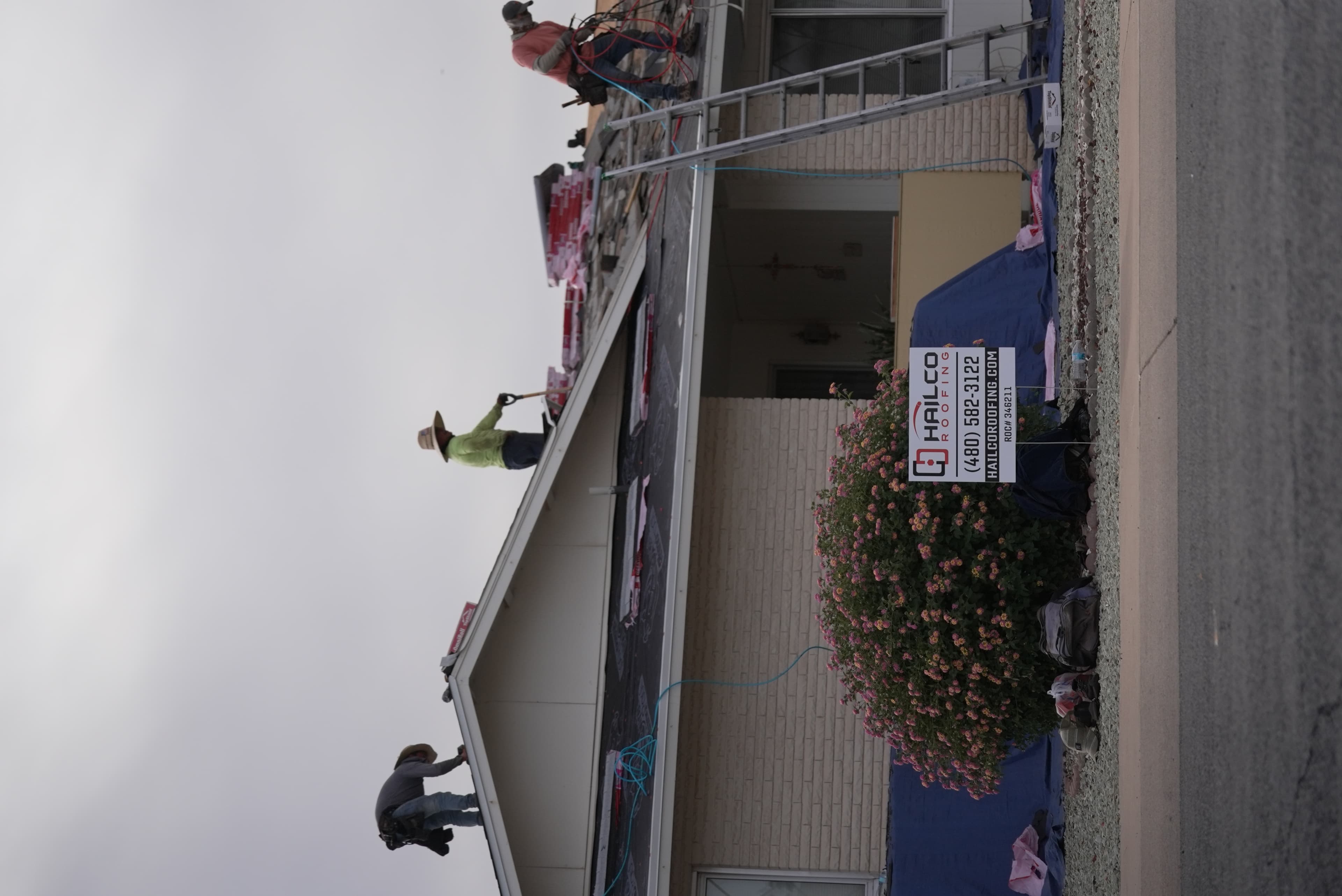
Every legitimate roofing quote you get in Scottsdale should include the permit fee as a separate line item, not bury it in labor. We itemize the permit on every estimate so you can see exactly what you're paying the City versus what you're paying us. If a contractor's quote doesn't mention the permit at all, that's usually a sign they're not planning to pull one.
What inspectors actually check
A typical residential re-roof inspection in Scottsdale takes fifteen to thirty minutes. The inspector is checking:
Underlayment. Type, manufacturer, and that the entire roof field has been re-underlayed (no patches left over old failing underlayment). Synthetic underlayment is now the standard and what inspectors expect to see. Felt-paper underlayment can still pass but draws more scrutiny.
Flashing. All penetrations (vent stacks, pipe jacks, skylights, chimneys, walls) have new code-compliant flashing. Reused or patched flashing on a re-roof is one of the most common reasons jobs fail inspection.
Drip edge. Properly installed at the eaves and rakes. Many Scottsdale homes built before the mid-2000s didn't have drip edge installed originally, and replacement is required as part of any re-roof.
Tile or shingle installation. Manufacturer-specified fastening pattern, proper headlap, ridge cap installation, hip cap installation. Inspectors carry the manufacturer specs and will check that the install matches.
Ventilation. Adequate intake and exhaust ventilation to meet IRC requirements (typically 1:150 or 1:300 of attic floor area depending on configuration). Inadequate attic ventilation is a common failure point on older Scottsdale homes where the original install was undersized for what current code requires.
Roof-to-wall transitions. Properly stepped or skirt-flashed at the junction between the roof and adjacent walls, not just sealed with mastic. This is one of the leak paths inspectors look at closely because it's the most-failed detail on amateur installations.
Inspectors aren't trying to catch you out. They're verifying that the work meets the code that protects the home from the next twenty-five-plus years of monsoons. We pass our inspections cleanly because we install to code by default, not because we know which specific items the inspector is going to look at on the day.
Common permit issues we see on Scottsdale roofs
The contractor pulls the permit but never schedules the final inspection. This leaves the permit "open" in the City's records indefinitely. From the homeowner's perspective the job is done; the City record says the work is incomplete. We've inherited several of these from previous contractors and had to either re-inspect retroactively or have the City convert them to "final by affidavit." Either path is a headache the original contractor should have prevented.
The contractor doesn't pull a permit at all. The work gets done, the homeowner doesn't think about it, then years later they try to sell and the buyer's title or home inspection flags the lack of a permit. Resolution involves retroactive permit application (often with doubled fees), possibly opening up the work for inspection, and possibly corrective work. Expensive surprise.
Permit pulled in the homeowner's name instead of the contractor's. Some contractors push homeowners to pull the permit themselves so the contractor can sidestep their own licensing or insurance issues. This shifts the liability for code compliance from the contractor to the homeowner. Don't agree to this, full stop.
Permit valuation undervalued. Some contractors submit a permit valuation well below the actual contract value to reduce the fee. This is fraud against the City and can void the permit if discovered. Legitimate contractors submit the actual contract value.
Wrong scope listed on the permit. Common when lift-and-set re-underlayment work gets permitted as "repair" instead of "re-roof" to avoid a more detailed inspection. If the actual scope doesn't match what's on the permit, the inspection can fail.
What happens if you skip the permit
I bring this up because we get the call. Sometimes the homeowner who skipped the permit is the one calling us in a panic before a closing. Sometimes it's a new owner who just bought the house and discovered the issue. Either way, the resolution is more painful than the original permit ever would have been.
Two enforcement scenarios:
Discovery during the work. A neighbor reports the job, or a passing inspector notices an unfamiliar crew without a posted permit. The City sends an inspector. Work stops immediately. You apply for a retroactive permit (the application fee is typically doubled for unpermitted work). The work gets inspected, sometimes requiring sections to be opened back up for inspector visibility. Corrective work as needed.
Discovery at resale. This is the more common one. The buyer's home inspection or title work flags the missing permit. The seller has to file a retroactive permit, schedule an inspection, and possibly have corrective work done before the closing can proceed. Either the closing delays four to eight weeks for resolution, or the seller gives a price concession to the buyer to take the issue off the table.
Roughly $400 to $1,200 of upfront cost (permit plus a clean inspection) versus $2,000 to $8,000 of resolution cost down the road (retroactive permit, inspection, corrective work, closing delays) makes this an easy call. We've never had a Scottsdale customer regret pulling the permit. We've watched several regret skipping it.
If you bought a home recently and you're not sure whether the prior roof work was permitted, the City of Scottsdale's online permit search will tell you in two minutes. Search by your address. If there's no recent re-roof permit on file and you can see the roof is recent work, that's worth resolving before you ever try to sell. For context on the HOA side of the same project (separate from the city permit, but often required in parallel), see our Scottsdale HOA roofing requirements guide. And if you're curious whether your neighborhood's typical build era puts your home in the re-underlayment window right now, the Scottsdale roof age guide by neighborhood walks through every major Scottsdale community.
How HailCo handles permits on every Scottsdale job
We treat the permit as part of the project, not a separate task you have to manage. On every Scottsdale residential job we run:
- We submit the permit application within forty-eight hours of contract signing
- We pay the City fee on your behalf and include it as a line item on your invoice
- We post the permit at the job site for the duration of the work
- We schedule the final inspection within twenty-four hours of work completion
- We attend the inspection and address inspector questions on the spot
- We deliver the closed permit to you for your records once finalized
If you have a property where roof work was done by a previous owner or a previous contractor without a permit, we also handle retroactive permits. Call (480) 582-3122 and we can walk through what's involved before you do anything, including whether the work that was done is likely to pass a retroactive inspection or whether corrective work is going to be required.
For a written estimate that itemizes the permit fee, materials, labor, and warranty separately, call (480) 582-3122 or request a free quote. Casey Carlson handles permit submittals and coordinates with the City directly on every HailCo job. Tanner Sewell (co-owner and lead estimator) walks every residential estimate himself before the permit ever gets pulled. We'll be straight with you about what the permit will cost, what the inspector is likely to look at on your specific roof, and what timeline to plan for. No high-pressure sales calls, no upsells you don't need. Just a real conversation about your roof.
Side-by-side
When you need a Scottsdale roofing permit (and when you don't)
| Scope of work | Permit required? | Why |
|---|---|---|
| Full roof replacement (tear-off + new) | Yes, always | Structural and material change covered by IRC |
| Lift-and-set re-underlayment (tile reused) | Yes | City treats underlayment replacement as a re-roof |
| Partial replacement over ~100 sq ft | Yes | Crosses Scottsdale's de-minimis threshold |
| Sheathing or decking replacement | Yes | Structural element change |
| Skylight install, replacement, or removal | Yes | Roof penetration change requiring inspection |
| Solar panel mount addition to roof | Yes | Structural attachment to roof framing |
| Single tile or shingle bundle spot repair | Usually no | Under the de-minimis threshold |
| Vent boot or pipe jack replacement | Usually no | Component replacement under threshold |
| Roof cleaning or surface coating | No | No structural or material change |
| Gutter and downspout work | No (different trade) | Not a roofing system change |
Frequently asked
Questions we hear about this.
Do I need a permit to replace my roof in Scottsdale?+
Yes, in almost every case. The City of Scottsdale Planning and Development Services department requires a building permit for full roof replacements, lift-and-set re-underlayment (even when the original tile is reused), partial replacements covering more than roughly 100 square feet, sheathing or decking replacement, skylight installation or removal, and any work that changes structural elements. Small spot repairs (a single tile, a few square feet of shingle, vent boot replacement) under the de-minimis threshold typically don't require a permit, but if you're not sure, call Planning and Development Services or ask your roofer before the work starts.
How much does a Scottsdale roofing permit cost?+
Permit fees are based on the valuation of the work. Most standard residential tile and shingle replacements ($14,000 to $25,000 contracts) carry permit fees in the $250 to $450 range. Premium replacements or complex jobs ($25,000 to $50,000+ contracts) typically run $450 to $800. Plan review fees add $150 to $400 when triggered, and failed-inspection re-inspection fees run $80 to $150 per return visit. Every legitimate Scottsdale roofing quote should list the permit fee as a separate line item, not bury it in labor. If a quote doesn't mention the permit at all, that's usually a sign the contractor isn't planning to pull one.
How long does it take to get a roofing permit in Scottsdale?+
For a routine residential re-roof in like-for-like material (tile to tile, shingle to shingle, with no structural change), the permit is typically issued within 1 to 5 business days of submittal through the City's e-Plan portal. Same-day or next-day issuance is common when the contractor submits a clean package the first time with no back-and-forth. Plan review (triggered by structural changes, new construction, commercial work, or significant load change like switching shingle to tile) adds 1 to 3 weeks to the timeline. Build a week of permit time into your project schedule as a default.
What happens if my roof was replaced without a permit?+
Two scenarios. If the City discovers the unpermitted work during construction (often via a neighbor report or passing inspector), work stops immediately, you apply for a retroactive permit (the application fee is typically doubled), the work gets inspected, and corrective work follows if anything isn't to code. More commonly, the issue surfaces at resale: the buyer's home inspection or title work flags the missing permit, and the seller has to file retroactively before closing can proceed. That resolution path runs $2,000 to $8,000 in retroactive fees, inspection costs, corrective work, and closing delays. The City of Scottsdale has an online permit search by address so you can check whether your property has open or closed permits on file before you try to sell.
Does HailCo pull the permit, or do I have to?+
We pull it. On every Scottsdale residential job we submit the permit application within 48 hours of contract signing, pay the City fee on your behalf (and itemize it on your invoice so you see exactly what's going to the City), post the permit at the job site for the duration of the work, schedule the final inspection within 24 hours of completion, attend the inspection ourselves, and deliver the closed permit to you for your records. If you have a property where prior roof work was done without a permit, we also handle retroactive permits and can walk through whether the existing work is likely to pass inspection before you commit to anything.
Next step
Need a Scottsdale roofing quote that includes the permit, itemized, no surprises?
We submit the permit within 48 hours of contract, post it on site, schedule the final inspection within 24 hours of completion, and deliver the closed permit for your records. You see the City fee as a separate line item, not buried in labor.
Services covered in this guide
Ready to act on what you read?
- Roof ReplacementFull roof replacement in Scottsdale & Phoenix: tear-off, new system install, permits, and cleanup — when repair is no longer the right call.
- Roof RepairTargeted roof repair across the Phoenix Valley — leaks, cracked tile, lifted shingles, and failed flashing found and fixed correctly.
- Tile RoofingScottsdale tile roofing specialist: concrete and clay tile installation, repair, and lift-and-set re-underlayment across the Phoenix Valley.
More resources
Keep reading.
- Read →
Cost & Financing
What a tile roof actually costs in Arizona (and what you're really paying for)
Most quotes lump material, labor, underlayment, and tear-off into one number. Here's how to break it apart and compare contractors honestly.
- Read →
Insurance & Storm Damage
The 12-point monsoon checklist every Valley homeowner should run
What to inspect (and what to photograph) within 48 hours of a storm: for your records, your roofer, and if needed, your insurance carrier.
- Read →
Materials & Shingles
Shingle vs. tile vs. foam: which is right for your Arizona home?
A side-by-side comparison from a contractor who installs all three across the Valley every week. No manufacturer marketing.