Insurance & Storm Damage
What to do (and not do) when the insurance adjuster comes to look at your roof
Adjusters aren't your enemy, but they're not your advocate either. Here's how to make the meeting productive without sabotaging your claim.
TL;DR
The quick version
- Have your contractor on the roof with the adjuster. Going up alone usually means a shorter scope and a smaller approved repair.
- Bring printed photos of every storm-attributable finding, organized by slope and dated within 48 hours of the event.
- Don't accept the adjuster's verbal scope on site. Wait for the written Xactimate report, then file supplements for anything missed.
- Solar panels, code-upgrade items, and discontinued tile color matches are the three most-missed line items on Arizona claims.
After you file a storm-damage claim, your carrier sends a field adjuster to inspect the roof and write a scope of loss. This meeting often determines whether your scope is fair, or whether you spend the next three months fighting for supplements. Most homeowners don't prepare for it. They should.
If you're reading this in Scottsdale before a storm has hit and want the prep playbook (pre-monsoon roof inspection, what to watch during a cell, how to handle the 48 hours after), our Scottsdale monsoon roof prep guide walks through the whole season. The article below picks up the moment your claim is filed and the adjuster is on the way.
Before the adjuster arrives
Get your roofer there. This is the single highest-leverage thing you can do. An experienced roofer (we do this hundreds of times a year) knows what code-required items, hidden damage, and accessory replacement should be on the scope. An adjuster working solo will miss things, sometimes by accident, sometimes by training. Having a roofer on the roof during the inspection eliminates 80% of supplement work that would otherwise happen later.
Have your documentation ready. Photos from the day of the storm. Date and approximate time of the event. Direction of wind. Damage photos you've taken since. Neighboring damage if relevant. If you can't easily put your hands on it, the adjuster won't credit it.
Don't pre-clean. Don't sweep up granules, pick up tile fragments, or trim damaged branches. Anything you remove is evidence you can't produce later.
During the meeting
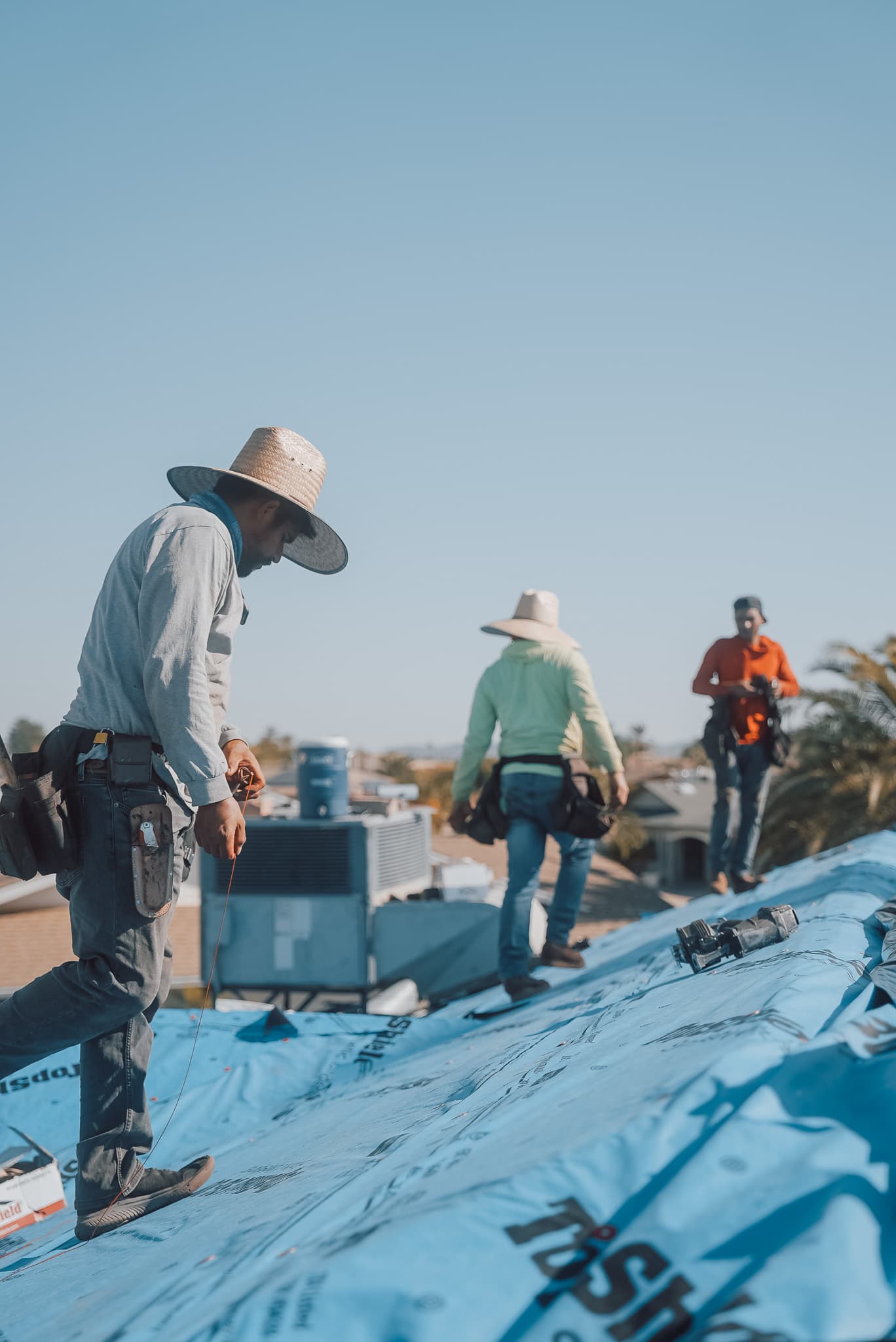
Let the roofer walk the roof. You don't need to climb up. Stay on the ground and let your roofer and the adjuster walk the roof together. We document everything we find, they document what they find, and the comparison happens in real time.
Ask what's being measured, not whether. Don't ask "are you going to approve this?" Ask "are you measuring full-perimeter drip edge replacement?" "Are you noting the cracked flashing at the chimney?" Specific questions get specific answers.

Don't volunteer information that isn't asked. This isn't about hiding anything. It's about not creating ambiguity. If the adjuster doesn't ask whether you've had previous roof work, you don't need to volunteer that you patched a leak two years ago.
After the meeting
Don't accept the first scope. The initial estimate is a starting point. Almost every storm-damage scope we see needs supplements for code-required items or items the adjuster didn't notice. We file these on your behalf (included in our scope at no extra fee) and most are approved without dispute.
Read the scope carefully. Even if your adjuster is reasonable and the scope looks fair, read it. Make sure it includes drip edge, underlayment grade, ventilation, ridge replacement, flashing, and any accessory items relevant to your roof.
Document everything in writing. Phone calls don't count. If the adjuster makes a verbal commitment ("we'll add that to the scope"), email them a recap. If they don't reply confirming, assume it didn't happen.
When to call in extra help
If the adjuster is openly adversarial, the scope is dramatically short, or the carrier is denying repair you can prove is storm-related, that's the time to bring in a public adjuster. They work for you (not the carrier), take 10 to 15% of the recovered amount, and are worth it on tough claims. We don't do PA work directly, but we'll refer you to PAs we've worked with effectively.
For Valley homeowners with active claims, call (480) 582-3122 to get HailCo on the roof during your adjuster meeting. We have the documentation flow down to a process, and the difference in approved scope is typically large.
Side-by-side
What to do (and not do) at an Arizona insurance adjuster meeting
| Phase | Do this | Don't do this |
|---|---|---|
| Before adjuster arrives | Have your contractor on site with photos and scope | Try to handle the meeting yourself to 'save money' |
| When adjuster arrives | Walk them through every documented finding | Let them set the pace or skip slopes |
| During the inspection | Take notes on what they photograph or flag | Agree to any verbal scope before written report |
| After the inspection | Wait for written Xactimate scope, review every line | Accept the first scope without supplement review |
| Supplement filing | File supplements for solar, code-upgrade, color match | Sign off on the initial approved amount as final |
| Repair scheduling | Confirm scope is complete before crews start | Start work before supplements are approved |
Frequently asked
Questions we hear about this.
Should my contractor be at the insurance adjuster meeting?+
Yes, almost always. Adjuster scopes done without a contractor on site tend to be shorter and miss supplements (solar removal, code upgrades, discontinued tile color match). Having your contractor walk the roof with the adjuster ensures every documented finding is included in the scope and gives you a witness if the carrier later disputes the damage. HailCo doesn't charge extra for adjuster meetings when we handle the repair.
What should I bring to an Arizona roof adjuster meeting?+
Printed photos of every storm-attributable finding, dated within 48 hours of the storm event. Your insurance declarations page (knows the wind/hail deductible). Notes on what's already been inspected by your contractor. A pen and notepad to track what the adjuster photographs and flags. If you have rooftop solar, the install paperwork showing panel make/model and mount type.
Can the adjuster deny my Arizona roof claim on the spot?+
They can recommend denial, but the formal denial comes in writing from the carrier afterward. If the adjuster verbally suggests the damage isn't storm-related, don't argue on site. Instead, request the formal written denial reason and bring it to your contractor for review. Many initial denials get reversed on reconsideration when proper documentation is added.
What does an insurance adjuster look for on an Arizona roof inspection?+
Wind damage (lifted shingles, missing tile, ridge cap displacement), hail damage (cracking on north-facing slopes, granule loss in gutters), and any signs of pre-existing wear that might reduce the storm-attributable portion. They photograph each slope, measure damaged areas, note tile profile and color, and check for code-upgrade triggers. Most adjuster meetings last 30 to 60 minutes.
What's the most common mistake homeowners make with adjusters?+
Accepting the adjuster's verbal scope without waiting for the written Xactimate report. Verbal scopes are often shorter than the formal report, and homeowners who agree on site sometimes find themselves locked into a smaller approved amount. Always wait for the written scope, have your contractor review it line by line, and file supplements for anything missed before signing off on the final claim amount.
Next step
Insurance adjuster scheduled? Let us meet them on the roof for you.
We've sat through hundreds of Arizona adjuster meetings. Documentation, on-roof walkthrough, and supplement filing all included at no extra fee when HailCo handles the repair.
Services covered in this guide
Ready to act on what you read?
- Insurance Claim SupportArizona roof insurance claim support: documentation, scope review, adjuster meetings, and supplement handling — included with your HailCo repair.
- Storm & Hail DamageWind, hail, and monsoon damage assessment across the Phoenix Valley with photo-documented claim support and adjuster representation.
More resources
Keep reading.
- Read →
Cost & Financing
What a tile roof actually costs in Arizona (and what you're really paying for)
Most quotes lump material, labor, underlayment, and tear-off into one number. Here's how to break it apart and compare contractors honestly.
- Read →
Insurance & Storm Damage
The 12-point monsoon checklist every Valley homeowner should run
What to inspect (and what to photograph) within 48 hours of a storm: for your records, your roofer, and if needed, your insurance carrier.
- Read →
Materials & Shingles
Shingle vs. tile vs. foam: which is right for your Arizona home?
A side-by-side comparison from a contractor who installs all three across the Valley every week. No manufacturer marketing.